
BBC on the ropes
Auntie has done it again. Taking the blame for all the wrong reasons.

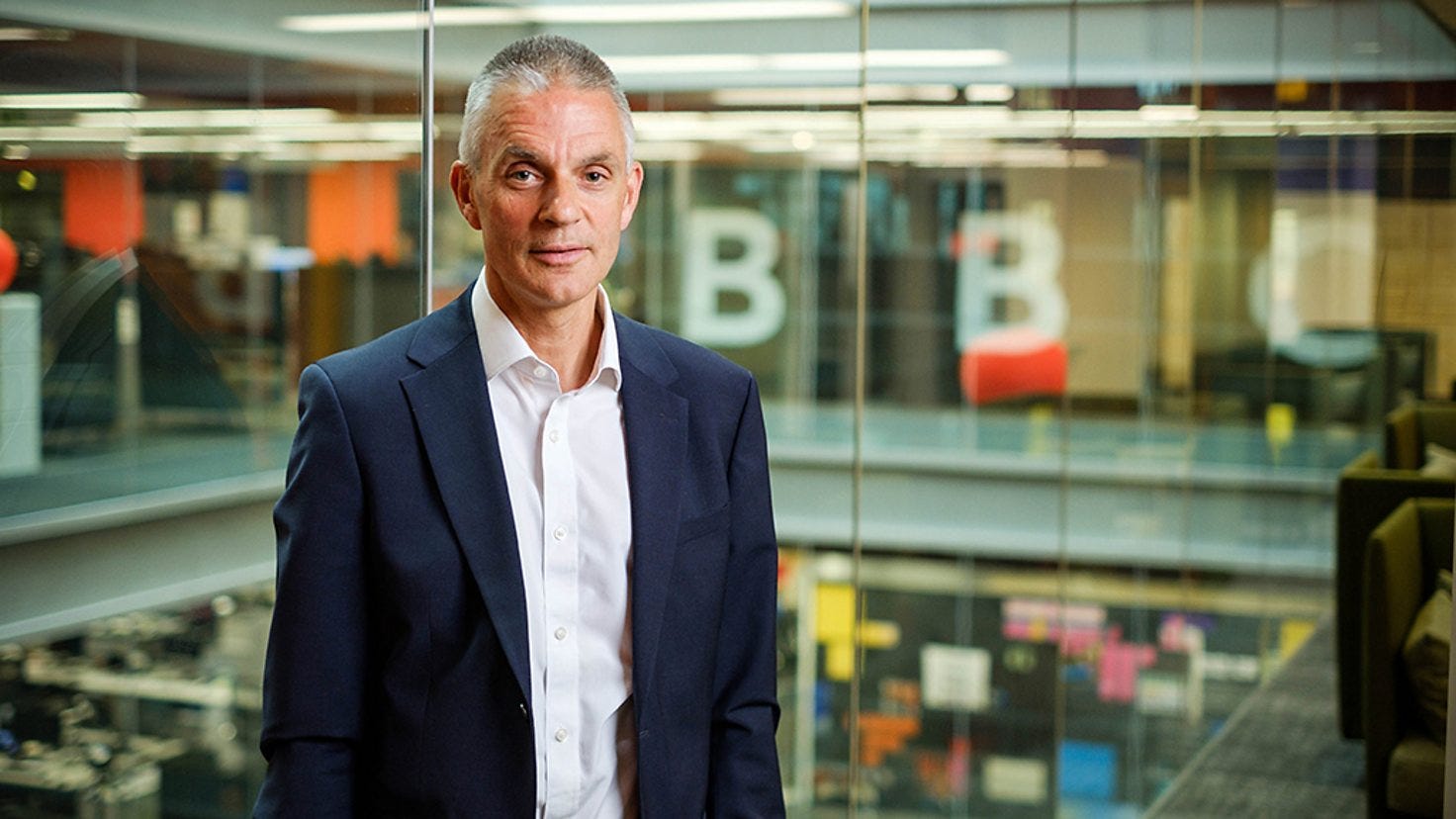
Earlier this year, I wrote a piece on BBC bias. It was informed by the six years I spent working in the Corporation’s central press office, during which time I got to see how it operated, the kind of internal and external pressures it faced, and how it dealt with crises, such as the one it is currently going through.
I’d suggest reading that piece if you want to understand my broad position. There’s already been so much said about this latest meltdown, that I want to keep this short.
Let’s not forget that the right-wing press have been out to get the Beeb for years. It was the same when I worked there. To them, the BBC is the major competitor, getting a shedload of public cash, and taking up an inordinate amount of bandwidth in the UK’s media ecosystem. They want it gone. This serves both their commercial and political imperatives.
I’m never sure how much they actually believe that the BBC is a bastion of anti-conservative bias. My strong suspicion is that they don’t really. The impression that it is serves their agenda entirely. That’s why this week has been a home run for them.
The game goes like this – convince the public the BBC is a woke-liberal madhouse, weaken its standing, defenestrate its already pliant leadership, let your internal allies grab more influence, and bolster your political position in the process. Job done.
However, the important point here is that the BBC might be considered biased, but not in the way they claim. Yes, there’s programming that evinces a more liberal viewpoint. Yes, there’s a tendency towards culturally progressive virtue signalling. And yes, there are editorial mishaps. But when it comes to news and political reporting – where the rubber really hits the road – the BBC’s overall output takes a decidedly pro-establishment slant. Numerous studies over the years back this up.1
Broadly speaking, the BBC’s function is to reflect and maintain the political consensus; to express and galvanise the UK’s role in the world; and to buttress the government’s line, especially in matters of foreign policy.
But wait. If it generally upholds the status quo, I hear you say, why do they want it gone? Three reasons: 1) to attack it is still more politically valuable to them; 2) despite its servility, it still isn’t allied enough with their increasingly deranged ideology; and 3) they want a bigger share of the media pie, and the power that comes with it.
That last point speaks again to the confluence of commercial and political interest. The goal is to effect the same kind of media consolidation happening in the US, to grab greater control of the information space, and shore up the worldview of those they serve. Essentially, the Western hegemonic position, lately fraying at edges, and desperate to crush anything that stands against it.
That’s partly why Trump is sticking his oar in. This is a great chance to sow some more chaos in the world. To call truth into question. To reshape major institutions in your own image. To dictate the narrative. That’s what fascists do. And the BBC have played right into his hands.
Yes, the Trump thing was an editorial mistake. A silly one. But that’s only part of the story. Remember, this has all played out against a background of mini-crises, many centred around the issue of Israel/Palestine, increasing pressure on BBC leadership over the last few months, and helping the right frame any anti-Israeli sentiment as anti-semitism, with the BBC providing the perfect fall guy.
This brings us back to the question of bias. They want you to believe the BBC is institutionally biased against Israel. Again, much of the evidence points to the exact opposite.2 I’m not going to re-litigate this here. Take a look at my earlier piece and the footnotes below. For now, let’s not forget that 100 BBC News journalists recently penned an open letter to senior management complaining they were under editorial pressure to adopt a pro-Israeli line.
Finally, let’s do a quick thought experiment. Two weeks ago, during the so-called ‘ceasefire’, the IDF killed more than 100 Palestinians in a series of airstrikes on Gaza.3 This news received limited coverage, most qualifying the reported numbers with the use of the phrase ‘Hamas-run health ministry’. There was one article on BBC News. I’ve not seen any follow up. Any validation of the numbers. Any report on who the victims were. No BBC Verify piece analysing what happened. Nothing. Just that one original article, which follows its brief opening paragraph with three more that cite in turn: 1) the Israeli military; 2) Israel’s defence minister; 3) Donald J Trump. That’s it.
Now imagine that Hamas had killed more than 100 Israeli civilians during the ceasefire. And imagine the level of coverage this news would have received. Rightly so, it would have been wall to wall, 24/7. But when it comes to the Palestinian dead, we’ve been taught to accept crumbs.4
Whichever way you look at it, this latest BBC crisis has been a win-win for the right wing press. They’ve played a blinder – hobbling their biggest competitor, floating the idea that it is biased in a way that suits their agenda, and consequently giving some much-needed cover to their pals in the Netanyahu regime.
The BBC is deeply flawed. It needs reforming. But this attack should give even its fiercest critics pause. It’s surely better to maintain a degree of public accountability than cede control to commercial interests. How long would it be before some awful tech-billionaire snaffled it up? We must conceive a model for the BBC that is fit for the future. This might be Utopian thinking, but better to try than just roll over and let it be ripped apart by the kind of jackals who perpetuated this coup. Otherwise, it is surely doomed.
A major research study and content analysis dating back to 2013 by Cardiff University School of Journalism (funded by the BBC Trust) demonstrates this. According to lead researcher Mike Berry: “The evidence from the research is clear. The BBC tends to reproduce a Conservative, Eurosceptic, pro-business version of the world, not a left-wing, anti-business agenda.” Similarly, recent statistical analysis of the flagship political debate show Question Time has shown revealed a tendency to platform rightwing guests.
See the recent report by the Centre for Media Monitoring, which analysed more than 35,000 pieces of BBC output over a one year period and found “a systematic pattern: the minimisation of Palestinian suffering and perspectives and the amplification of Israeli narratives, victimisation and emotive stories.”
Since October 11, the first full day of the ceasefire, Israel has killed at least 245 Palestinians in Gaza and wounded 623, while 529 bodies have been recovered from under the rubble, according to the Ministry of Health. Source: Drop Site News.
Just a few days ago, ITV released the documentary Breaking Ranks: Inside Israel’s War, which interviews IDF soldiers who speak about what they saw and did in Gaza while alleging serious misconduct and potential violations of international law. As I write, the BBC have not covered this story, or referenced this investigation, in any way. Another documentary, Gaza: Doctors Under Attack, was shelved by the BBC earlier this year, and eventually shown on Channel 4.
Really insightful
Excellent